
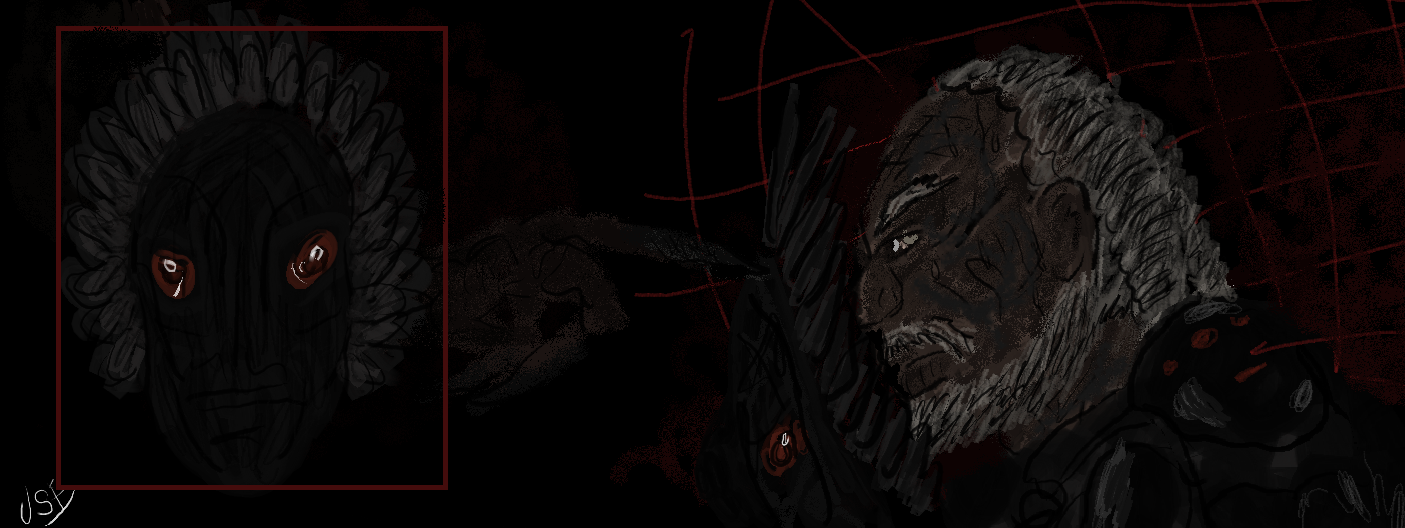
Chapter 1
Ndaa.
Come sit. The fire is low and the frogs are already talking. In these Venda mountains, if you stand too long in the doorway, the nights spirits think you invited it in.
Me, I am Mulalo Seboko. One of the Elders of the Tikat’kota. Pretoria people write “voodoo shaman” on paper and does tablets like that does finishes the stories. Eish. Journalists are cheap. We are the ones who knows the secret places. The midzimu still answer us. The rest of the country switched on the lights and said, “Ag no, there’s nothing in the dark.” Hayi. There is something.
In the villages nearby they know me. When the goats refuse to sleep, they call. When a child’s fever turns the eyes white, they call. When a man drinks from the wrong water and his blood starts fighting him, they come knock while the sun is still coming up. That work is for the people. That one we don’t hide.
The other work… yoh. That one has no manners.
They call themselves Black Oreous. Don’t mix them with ordinary soldiers. These ones are the American government’s supernatural special forces. The ones they send when the problem is no longer a gun problem. When a occult and demonic forces that was supposed to stay shut. When hole town vanishing and want is left his ether there last action or there human remains.
Myself, I don’t like Black Oreous. I’m telling you now. They walk into our land like the mountain owes them a parking spot. But we stay neutral. Not because we are soft. Because of the Benefactor. Protection for the villages. Quiet for our places. And the ugly truth Pretoria and those American people both understand: if Tikat’kota falls, there is no second wall. Forces beyond our imagination will devour world soul.
So they bring me their broken ones at night. A bakkie with no number. A man whose poison is not from any snake in this shango. That is when the real work starts.
Listen carefully now. There are evil spirits that don’t just trouble a person. They want the house. They want the body of the soul. They crawl in through a wound, through a dream, through a thing a man touched the veil between death. Once they are inside, they sit on the chest and start stealing the breath. We call that parasite tshilombo. When it has already begun to take the control of the person, Tikat’kota has another name for it: Tshifhefho. The breath-thief. The one that wants to wear you.
Our job is to take that parasite out.
We use the old tools. Not does church things. Clan things. Short mopane-wood nails. Hardwood pegs darkened with smoke and ash. A small horn. A gourd with the bitter medicine. The wooden nails are not for building. They are for pinning. You put them where the invading spirit is hiding — temples, breastbone, the burn mark under the throat — so Tshifhefho cannot slide from the chest into the stomach, from the stomach into the blood. You pin it, then you pull.
I will tell you how it looks. I will tell you how it sounds. Because paper will never tell it right.
That night the Black Oreous man was already half gone. Sweat like rain. Eyes open but nobody home. His chest was jumping by itself, like something inside was knocking to be let out and also refusing to leave. I sat opposite him. Forehead to forehead. Two thumbs on the temples. The pegs went in the earth around him first, then the smaller wooden nails at the points the ancestors showed us. I went into his mind like floodwater going into a dry donga.
Then the fight started.
Eish, my child. It is not clean. It is not quiet. I was screaming until my throat was raw. Not English. The old tongue. The one the thing understands.
“Bva!
Tshilombo, bva kha muvhili!
Tshifhefho, i tshimbile zwino!
Bva! Bva! Bva!”
Come out. Spirit, leave the body. Breath-thief, go now.
The man was shaking. I was shaking. My voice was gone and still I was shouting. You could see it on him — the chest going up, and up, and up, like the lungs were filling with a second person. Higher. Higher. The wooden pegs trembling in the ground. The fire flattening itself as if something was sucking the air.
Then it broke.
From his mouth first. Then the nose. Not vomit. Not smoke like a cigarette. A thick gaseous air, grey-white, twisting, with a sour heat you can smell in your teeth. Tshifhefho leaving the house it tried to steal. It came out in a long pull, like the body was exhaling a life that was never his. The chest dropped. The man collapsed. I fell on my side, finished, empty, tasting the blood.
That is the work they are allowed to see. That is the work they pay for.
What they must never know — not Black Oreous, not Pretoria, not any government that thinks it owns us — is this: Tikat’kota does not only pull things out.
We walk.
There is a place that wants world soul. First we say it in the tongue of this mountain:
Maswiswi a sa Gumi.
The Darkness that does not end.
Then you people say Everlasting Darkness. Don’t picture a cave. A cave still has walls, hey. This thing has no end. A void that has been hungry since before this sun was lit. Inside there live old deities, names already forgotten by unknown era, here still walked with no fire. Demons that are not stories for children. Things from other dimensions that signed pacts with the Lords of Darkness.
Their name with us is not “lords” like in a book.
Vharena vha Maswiswi.
The Lords of the Unending Dark.
Those ones sit on thrones in the everlasting void. They don’t want not just our souls but the all-knowing soul. And Tshifhefho, that breath-thief we pull from a man’s mouth and nose, is only a small servant of theirs. A parasite sent ahead. A scout invading other mans soul.
Our clan has been on the brink since before they drew this country on a map. Every generation some of us cross into Maswiswi a sa Gumi and fight so that galactic parasitic darkness doesn’t pour into this earth like Limpopo floodwater. It eats the same way termites eat a roof pole. Quiet-quiet. Patient. Until the whole house is already hollow and people are still saying, “Ag, it’s just the wind.”
South Africa knows only one true thing about us: we are the wall. That is why they protect us even while they use us. That is why Black Orues is allowed to land in our hills, drop their dying man, and fly out again pretending they were the ones who saved the world.
I have stood in that void. I felt Vharena vha Maswiswi look at me the way a man looks at an insect that learned how to talk. I have made the small bargains with other deities of that realm to keep us safe from becoming a door. I have come back with blood in my mouth and that same sour heat Tshifhefho leaves in the air.
Listen well now. The fire is talking low. The villages are sleeping. Somewhere a Black Orues machine is already in the air, bringing another man who thinks his classified file is the biggest secret on this earth.
It is not.
We are still here.
Maswiswi a sa Gumi is still hungry.
Vharena vha Maswiswi are still waiting.
And me, I am still Mulalo Seboko, elder of the Tikat’kota.
Chapter 2
That is how we say it. Stay close to the earthly spirits, never let shadow walk!
I got the story that still sits in my chest… eish. That one came from the other side of the river.
They crossed at first light, those people. The water was high that week. Brown. Angry. You could hear stones knocking each other like teeth. They came with a child wrapped in a blanket that was already too hot. A girl. Her name was Tshifhiwa. Gift. Yoh. The ancestors have a cruel sense of humour sometimes.
She was not screaming. That was the first wrong thing. A child that sick should cry. This one only stared, and her chest was doing a work no child’s chest should do — rising too high, falling too slow, like two people taking turns with one pair of lungs.
The mother was crying. The uncle was saying, “We heard the Tikat’kota stay this side. We heard Mulalo Seboko can pull a thing out of a body.” They had walked. They had paid a man with a bakkie, then the bakkie died, then they walked again, then they crossed that river on foot with the girl on the uncle’s back. By the time they reached my fire they were finished. Mud to the knees. Eyes white with fear.
That is when the other elder came.
His name is Mavhungu Tshikovha. Older than me by a few winters, harder than me by a whole lifetime. A man who chews words before he spits them. He looked at the girl once, only once, and he clicked his tongue.
“No,” he said.
Just like that.
I said, “Mavhungu, the child is dying.”
He pointed at her chest with his stick. “That is not dying. That is wearing. You know what that is. Don’t pretend you are deaf.”
“It is tshilombo.”
“Hayi.” His voice went sharp. “Don’t insult me in front of strangers. That is not a hungry village spirit. That is Tshifhefho. The breath-thief. Look at the way the blanket lifts. Look. The thing inside her is already trying on the house.”
The mother started wailing. I lifted my hand. Soft. “Enough. She is a child.”
Mavhungu laughed once, no joy in it. “A child can still be a door, Mulalo. You open this one here, in our place, and you tell me what follows her out. You think Vharena vha Maswiswi send a scout into a small girl by accident? They sent it because nobody watches a child until it is too late.”
I felt the heat in my neck. “So we send her back across the river? Let the water take her? Is that the wisdom of Tikat’kota now?”
“The wisdom of Tikat’kota is survival,” he snapped. “We are the wall. If the wall starts taking every broken thing the world carries over the water, the wall falls. You want to be kind. Kindness is how Maswiswi a sa Gumi walks into a hut smiling.”
“I want to be a healer,” I said. “That is the first oath. Before government. Before Black Oreous. Before your fear.”
He stepped close. Close enough I could smell the smoke in his beard. “My fear has kept this clan alive. Your heart will bury it. You pin that thing with mopane nails in this circle and it will know the way home. It will remember our fire.”
“Then we pin it well,” I said. “Then we pull it. Then I walk it back myself if I must.”
Silence. Even the river, far below, seemed to wait.
Mavhungu looked at the girl again. Tshifhiwa’s lips had gone the colour of ash. Her chest rose. Higher. Higher. The mother whispered, “Please.”
Mavhungu spat into the dust.
“You do it, Mulalo Seboko. You. If this thing gets loose, it is your name the midzimu will chew. Not mine. I will stand at the edge and I will hold the names. That is all I will give you.”
“That is enough,” I said.
We began.
I will not pretty it. Barker can pretty the dark if he wants. Me, I tell it as it was.
We cleared the hut. Fire in the centre. The mother outside — a mother cannot watch this and still remain a mother. Mavhungu stood at the doorway with his stick, mouth already moving the old names, calling the midzimu to hold the walls. I laid Tshifhiwa on the mat. So small. So hot. The thing inside her made the blanket climb and climb.
Out came the tools. Short mopane-wood nails, smoke-dark. Hardwood pegs. The horn. The gourd with the bitter ash-medicine. The nails are not for building, my child. They are for pinning. You put them where the thief hides so it cannot slide from chest to stomach, from stomach into the blood. Temples. Breastbone. The hollow of the throat. Pegs in the earth around her, a circle that says: this far. No further.
I put my forehead to hers.
Eish. What I met in there was not a child’s dream. It was a court. A dark court. Something old sitting behind her ribs like a guest who had already chosen the furniture. It knew me. It smiled with her mouth without using her mouth.
I started to pull.
Then I started to scream.
Not English. The tongue the thing was born under.
“Bva!
Tshilombo, bva kha muvhili!
Tshifhefho, i tshimbile zwino!
Bva kha nwana!
Bva!”
Come out. Spirit, leave the body. Breath-thief, go now. Leave the child.
Mavhungu was shouting from the door, arguing even while he helped me, the two of us fighting the dark and each other in the same breath.
“Hold the left peg, Mulalo! It is slipping down!”
“I have it!”
“You don’t have it! It is climbing the throat!”
“Then speak with me, old man! Don’t only warn me!”
So he did. His voice joined mine, hard as stone.
“Vharena vha Maswiswi, ni songo dzhia nwana!
You will not take this child!”
Tshifhiwa’s back lifted off the mat. The chest went up, and up, and up, as if the small cage of bone was being forced to make room for a second person. The wooden nails trembled. The fire flattened. My throat tore. I could taste blood. I thought, Mavhungu was right. This one is too much. Then I thought, If I stop now, the gift dies wearing a borrowed mouth.
So I did not stop.
The body chose surrender over breaking.
It left by the mouth first. Then the nose. Not vomit. Not church smoke. A thick gaseous air, grey-white, twisting, sour enough to sit in your teeth. Tshifhefho pouring out of a child like heat with a will. It hung a moment above her face — I swear it hung — as if it was looking at me. Then Mavhungu struck the earth with his stick and the thing shredded into the night like dirty mist.
Tshifhiwa’s chest dropped.
She cried.
Yoh. That cry. That was the first human sound she had made since they crossed the river. A real child’s cry. Ugly. Beautiful. Alive.
I fell on my side. Empty. Finished. Mavhungu did not come to hold me. He stood there breathing hard, sweat running into his eyes, and he said, very low:
“You see. It knew the way to our fire.”
I wiped my mouth. “And it left.”
He looked at me a long time. “This time.”
Outside, the mother heard the crying and her legs went. The uncle started thanking every name he knew. Across the valley the river kept knocking its stones together, as if it was telling the other bank: the child came back.
Me, I lay there tasting that sour heat, the same heat I have tasted in Maswiswi a sa Gumi, and I knew Mavhungu and I were both right. Kindness opened a door. Fear wanted to lock a child outside it. Tikat’kota lives in that argument. We always have.
The girl slept. The pegs came out of the earth. Mavhungu put his stick across the doorway and would not speak to me until morning.
At morning he only said, “Next time you want to be a hero, Mulalo Seboko, you cross the river yourself and you do it on their side. Not on ours.”
I said, “If the next one is a child, I will cross. And I will still pull.”
He shook his head. But he left the tools where I could reach them.
That is the story. The curious one. The one that still sits in my chest. Not Black Oreous. Not a soldier. A small girl named Gift, a river in flood, and two elders of Tikat’kota nearly tearing the clan in half before the ritual even started.
The wall held.
The child lived.
And Vharena vha Maswiswi learned our fire a little better than I wanted them to.
Now. Put wood on. I am finished talking.
Chapter 3
Ndaa.
This one does not start with a sick child or a nameless soldier. This one starts with a man I already saved once, coming back to collect the debt in the wrong direction.
They did not send a bakkie this time. They sent a machine that beat the mountain like a drum. Black Oreous. No markings. The dust stood up in a column and then there he was, walking toward my fire as if the path still remembered his blood.
Thabo Mercer.
Yoh. The years had done something strange to him. A man who walked out of the last big war should be bone and paper by now. This one still stood like a spear. The wilderness had marked him. America had dressed him. The Deep Sector had kept him. But the eyes… those were still the eyes of the wounded boy the convoy pulled out of the border grass.
Mavhungu Tshikovha was already at my shoulder. Stick in the dirt. Jaw tight.
“You see,” he said, not bothering to lower his voice. “The stray came home wearing a uniform.”
Mercer stopped at the edge of the circle. He did not cross it. At least he remembered that much.
“Mulalo.” His English had America in it now, but the mouth still knew this country. “I would have come on foot if the time allowed it.”
“Time never allows you,” I said. “It only chases you. Sit if you came as a man. Stand if you came as Black Oreous.”
He stood.
That was the first answer.
He spoke of a veil. Not a small tear like the ones we pin with mopane nails. A great one. A breaking that would not stop at a town, or a river, or a country. He said the world’s pulse in his Deep Sector had gone dark and cold. He said Maswiswi a sa Gumi was no longer only hungry. It was gathering. A dark rebellion. Not men with flags. The hollow. The Lords. The scouts already wearing bodies. He said if the veil shatters, the earth itself becomes a door, and the all-knowing soul is what they mean to eat.
“You are the only ones who can stop it,” he said. “Not Sheol Squad alone. Not my steel. Not Area 51 dust. Tikat’kota. Your walkers. The ones who have already stood in that void and come back with blood in the mouth.”
Mavhungu laughed. That ugly one-note laugh.
“Hear him. The boy we dragged out of the thorns now tells the mountain it must follow him to America.”
Mercer’s face did not move much. “I am not asking the mountain to follow me. I am asking the wall to stand where the crack is widest.”
“You made the crack wider,” I said. “Don’t come here and forget that.”
Then the history came out. Hot. Old. The kind that has been sitting under the tongue for years.
I told him of the border. How we found him leaking into the soil. How the elders argued even then — Mavhungu’s father was one of them — whether a wounded outsider was a mercy or a seed. I told him of the months. How he watched our rites like a starving man watches a pot. How he learned the dead have territory. How he learned spirits whisper through fractures. How he left with more than his life.
“You took our knowing across the water,” I said. “You put it in black steel. You carved our markings into your corridors. You built a wound and called it a shield. Then you landed on this mountain like it owes you a parking spot. Towns vanish. You bring us the leftovers. Now you want the tribe.”
Mercer’s voice stayed low. That made it worse.
“I took what I took because I saw Missouri coming before Missouri had a name. Mesheltown did not die. It was emptied. Same silence I first learned here. Same dust. I built Black Oreous so your villages would not become the next hollow map. You call it theft. I call it the only language Washington understands.”
Mavhungu stepped into the firelight.
“You call it whatever lets you sleep. We stayed neutral for the Benefactor. Protection. Quiet. That was the terms. Not this. Not you walking into our circle to harvest the young.”
“I am not harvesting,” Mercer said. “I am asking for aid.”
“Same mouth,” Mavhungu snapped. “Different sugar.”
I looked at Mercer hard. “Say the true terms. Not the pretty ones.”
He did.
The great veil is coming. Sheol Squad can cut, burn, blind, dive. They cannot walk Maswiswi a sa Gumi the way we walk it. He wants Tikat’kota eyes inside Black Oreous. He wants our students taught to his squads — not to become Americans. To stand with Blood Ronin, Magick-Knights, Mystic Troopers when the rebellion tears through. He wants me there. Not as a mascot. As the man who knows when a thing is tshilombo and when it is Tshifhefho and when it is already a Lord wearing a smile.
“And in return?” I asked.
“The mountain stays protected. Pretoria keeps its silence. My machines stop treating your hills like a landing strip unless you call. Your rites stay yours. No vault. No dissection. No journalist. The young who come remain Tikat’kota. When this is done, they return. If they die, their names come home. If I break that, you may close every door you ever opened for me.”
Mavhungu struck the earth with his stick.
“You hear him bargain like the void. Pretty cages. Mulalo, if you take the bright ones off this mountain, the fire gets thin. The villages will knock and find strangers. You leave, and Vharena vha Maswiswi will remember which hut stood empty.”
“If the veil shatters,” I said, “there will be no hut.”
“That is how they get you,” Mavhungu said, pointing the stick at Mercer without looking away from me. “They make the end so big that mercy looks like treason. We are the wall here. Here. Not under his black steel. Not beside his sea-helms and blood knives.”
Mercer finally looked at Mavhungu, and for a second I saw the boy again. The one who had sat quiet when elders argued over his body.
“I remember your father,” he said. “He voted to leave me in the grass. You vote the same way now, only the grass is the whole world.”
Mavhungu’s mouth pulled tight. “Careful, stray.”
“Enough,” I said.
The fire popped. Far down, the river knocked its stones. I thought of Tshifhiwa’s chest going up and up. I thought of the Black Oreous man exhaling a life that was never his. I thought of Mercer’s Deep Sector pulsing like a sick heart. I thought of Mavhungu putting his stick across my doorway after we saved the girl, saying next time I must cross to their side.
Yoh. The old man had spoken a prophecy and hated it.
“I will not give you the tribe,” I told Mercer. “Hear that clearly. Tikat’kota does not pack itself into your installation. The mountain stays. The elders stay. The work for the villages stays.”
Mavhungu’s shoulders dropped a finger’s width. Too soon.
“But I will come,” I said. “And I will bring the best of the young. The brightest. The ones who can pin and pull and walk without getting eaten. They will aid your black operatives. They will not become them. Those are my terms on top of yours. If Sheol Squad tries to turn my students into thresholds with no names, I take them home in the night and I close the path I once opened for a bleeding boy.”
Silence.
Mavhungu’s voice went raw. “Mulalo.”
“I know.”
“You leave this fire, you are not only Mulalo Seboko. You are the door he always wanted.”
“Then I will be a door that bites.”
Mercer nodded once. No smile. He had the sense not to look victorious.
“Agreed.”
Mavhungu stared at me as if I had already become mist.
“Then go,” he said. “Go before I say the thing that cannot be taken back. I will hold the names here. I will hold the villages. If the young do not return, Thabo Mercer, I will not argue with Mulalo again. I will come for you. And I will not come alone.”
Mercer said, “If they do not return, you will not need to come. I will already be dead.”
That, at least, sounded like a man and not a file.
Before dawn I chose them.
Not children. Do not make that mistake in your head. The best and brightest of my students — young, yes, but already burned by the work. The ones who could sit forehead to forehead and not flee when the chest began to rise. The ones who had seen Tshifhefho leave a mouth as sour gas and still pick up the pegs after. I told them the mountain was not discarding them. I told them Mavhungu would spit their names and still pray them home. I told them Black Oreous is a wound sealed with steel, and we are going inside it as Tikat’kota, not as Mercer’s ghosts.
They did not cheer. Good. Cheer is for people who have not smelled the void.
I left my stick with Mavhungu. He did not take my hand. He only said, very low:
“Stay close to the earthly spirits. Never let shadow walk. If you forget that under his black roof, you are already theirs.”
“I will not forget.”
The machine lifted. The mountain shrank. For the first time in my life the fire was below me, not in front of me. Mercer sat across from me, hands on his knees, the overseer of Black Oreous, the stray we should perhaps have left in the grass.
He said, “Thank you.”
I said, “Don’t thank me yet. You asked the wall to move. Now we will see if the earth still stands when we get there.”
That is how I left my tribe.
Not in anger.
Not in surrender.
In argument that had finally run out of ground.
The great veil is coming.
The dark rebellion is not a story for journalists.
And Tikat’kota’s young are now flying toward a wound in America, carrying mopane nails into a house of black steel.
Put wood on if you are still sitting at my old fire.
Mavhungu will need it.
Me, I am already gone.
Chapter 4
The storm was not weather.
I understood that before the wheels of Mercer’s machine even found the American ground. From the window the sky was wrong. Not cloud. Not night. A wall of walking darkness, upright, moving, like Maswiswi a sa Gumi had stood up and decided the earth was a floor. Lightning that was not lightning. A slow uprising in the veil, wide enough to swallow a country if it leaned.
Eish. I have walked that place. I have bargained in it. I have never seen it come to us like this. Like an army that no longer bothers to hide.
I looked at Mercer. He was already watching me.
“You see it,” he said.
“I see it.” My mouth was dry. “This is not a tear, Thabo. This is rebellion. The Lords are not sending scouts. They are lifting the whole dark.”
He smiled then. Not kind. Not cruel. The smile of a man who had waited years for the mountain to finally admit the fire at home would not be enough.
“I will make you more than what you are.”
Yoh. Those words sat in me like a peg. Promise and insult in the same breath. Mavhungu would have spat. Me, I only nodded, because the sky outside was already eating the horizon, and something had to get done.
Black Oreous was not a base. He had told the truth in his files. It was a wound sealed with black steel.
We went down. Surface Sector first — the lie, the dead bunker, the dust of a war nobody was supposed to remember. Then the Core. Sigils in the walls I knew in my blood. Our markings. Stolen and saved in the same act. Ritual rooms beside briefing rooms. Men and women of Sheol Squad looking up as we passed: Blood Ronin with quiet blades, Magick-Knights with those too-large sea eyes, Mystic Troopers smelling of root and wet earth. They looked at my students the way wolves look at a new pack that has not yet decided if it hunts with them.
Then Mercer opened a door that did not want to be opened.
The prototype suits stood in a row like empty men.
Black. Not paint-black. The black of a closed eyelid. Plates fitted close to the body, etched with the same mountain signs I use to pin Tshifhefho, married to American steel and Deep Sector work. The helm sealed the whole head. Along the spine, a thin line of horn and wire. In the breast, a hollow where a gourd of ash-medicine would sit against the heart. Mercer said the suit was built for one thing: to walk the dark world and not be worn by it. Protection against the void. Against the breath-thief. Against the walking dark we had just flown beside.
I put my hand on the chest-plate.
I felt the offer.
I felt the terror.
The offer: my young would not go into Maswiswi a sa Gumi naked as I once went, with only pegs and a raw throat. The terror: once you wear a thing made to enter the dark, the dark learns your shape faster. Mavhungu’s warning came back like spit on the wind. If you take the bright ones off this mountain, the fire gets thin.
Mercer said, “They will not replace your rites. They will keep your people alive long enough to finish them.”
I said, “If this steel forgets it is a tool, I will break it myself.”
“Then we understand each other.”
We did not sleep.
The uprising would not wait for morning. The world’s pulse in the Deep Sector was a fist now, not a heartbeat. So they put us back in the air. A Black Oreous plane. No windows a civilian would trust. But in the belly there was a bay, and through the open ramp the walking darkness went on and on beneath us — a country of un-light, moving, lifting, like a black flood that had learned how to stand.
That is where I stopped being only an elder by the fire.
That is where I spoke to them as the work required.
“Look at me.”
My students turned. Young. Bright. Already afraid in the correct way. Around them Sheol Squad were checking straps and blood-grooves and helms. My people waited on my mouth.
“Why do we fight?”
Nobody answered. Good. I did not want a pretty answer.
“We do not fight for Pretoria’s quiet. We do not fight for Washington’s files. We do not fight so Thabo Mercer can sleep like a king under black steel. We fight because if we do not, the dark does not only take a man. It takes the house. It takes the village. It takes the world soul. You saw Tshifhefho leave a mouth as gas. That was one thief. Out there—” I pointed my chin at the ramp, at the walking dark “—that is the whole court standing up. Vharena vha Maswiswi. The rebellion. If we fail, there is no second wall. Mavhungu can hold the mountain until his stick breaks. It will not matter. There will be no mountain.”
“Arm.”
I will tell you how it looked. Paper will still get it wrong.
First the under-wrap, close to the skin, smoked with the bitter ash. Then the chest-plate, heavy, kissing the breastbone where we used to set a wooden nail. The burn-point at the throat covered by a collar of dark metal. Peg-points along the ribs — not wood now, steel pins that lock so the thief cannot slide from chest to stomach to blood. Arm plates. Gloves that still leave the fingers free enough to press a temple. The belt with the small horn. The gourd seated over the heart with a click that sounded too much like a coffin latch. Then the legs. Then the boots that would walk a place that is not ground. Last the helm. When it came down, my students’ faces disappeared. Only dark glass. Only breath inside.
They stood there until they were no longer young people in an American belly.
They were uniformed.
Tikat’kota in a skin Mercer had made.
Sheol Squad closed ranks with them. Blood, abyss, root, and mountain. One line.
I sealed my own helm last. For a moment I was only Mulalo Seboko in the noise of the plane. Then I was the wall, moved.
I walked them to the ramp.
The walking darkness went under us like a living floor. Cold came up. The sour heat I have tasted in the void and in a dying man’s teeth. Far off, something vast turned, as if it had heard steel enter its weather.
I spoke the last words with my own mouth, before the helm took even that.
“You are still Tikat’kota. You will pin. You will pull. You will not be worn. If the suit begins to feel like a home, you remember the fire. You remember Mavhungu’s stick across the door. You remember the girl who cried when the thief left her. That cry is why we fight. Not glory. A living chest that can fall and rise again.”
The ramp went wider.
Mercer stood behind us, overseer of Black Oreous, the boy from the grass, the man who said he would make us more.
“Now,” I told them.
They looked out with me.
At the uprising.
At the dark that walks.
At the first work of a war that had been coming since before they drew countries on a map.
That is how the prologue ends.
Not with a village.
Not with a river.
With Tikat’kota stepping out of a black plane into the storm of the veil, armored, afraid, and still ours.